ADA Handicap Obtainable Portable Washroom Rental for Inclusive Event Gain Access To
@troytskj342
October 14, 2026 · 14 min read
When people prepare an occasion, toilet gain access to commonly gets dealt with like a logistics line product. It should not. For several guests, the distinction between feeling welcome and sensation left out comes down to whether they can conveniently, safely, and independently use the restroom on site.
That is why an ada handicap available mobile restroom is not a good additional. It belongs to standard access.
I have actually seen this issue approached in two very various ways. In one case, coordinators dealt with availability as an afterthought and added a single unit late while doing so, then placed it on irregular ground at the edge of a field. Technically, they had actually leased an ada portable restroom, yet functionally they had actually not created genuine access. In another case, an occasion group started by asking where guests with flexibility disabilities would park, how they would certainly take a trip to the entryway, where they would rest, and just how they would reach the toilets without barriers. The restroom service was part of that larger access strategy, and the whole occasion really felt different. It felt considerate.
That distinction issues. Renting ada certified mobile restrooms has to do with more than checking a box. It is about making sure a person utilizing a mobility device, pedestrian, mobility scooter, or other flexibility help is not forced to improvisate their means via a fundamental human need.
What the ADA requires for mobile toilet access
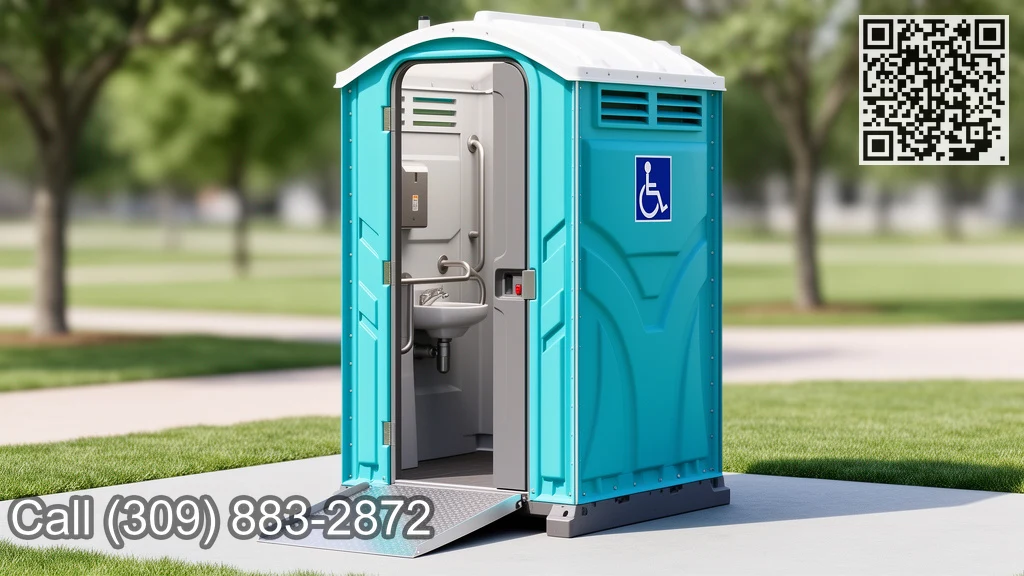
For mobile commode services in the United States, the controlling government requirement is the 2010 ADA Criteria for Accessible Design, as analyzed by the U.S. Gain Access To Board and the Department of Justice. For occasion coordinators and site managers, that means an obtainable system is not just a larger delay. It has to fulfill access needs in a meaningful, technological way.
At short-term occasions and various other websites where mobile single-user commode devices are provided in a cluster, at the very least 5 percent of the units in each cluster need to be accessible. That guideline is essential because some planners still presume ease of access can be handled at the venue level as opposed to at each washroom location. The standard is much more particular than that. If there are portable bathroom collections, accessibility has to be dealt with within those clusters.
This is one location where language matters. People might look for an ada available mobile restroom, ada compliant mobile toilet, or ada-compliant portable toilet, and while those expressions sound similar, what really matters is whether the system and its positioning please the relevant ease of access standards. A vendor can market an ada mobile toilet rental, however the organizer still has to ensure the device is determined effectively, obtainable by an available path, and installed in a manner that sustains independent use.
Accessible mobile commode systems have to additionally be related to the International Sign of Accessibility. That noting is not attractive. It helps people locate the proper system rapidly, especially in huge or jampacked occasion settings where a person might already be managing time pressure, discomfort, tiredness, or embarrassment.
A compliant unit is just component of the picture
This is where excellent purposes commonly drop apart.
A site can rent the best ada-compliant portable restrooms and still fail visitors if the surrounding arrangement is wrong. The requirements need an easily accessible path and available entry. If ramps or touchdowns are required, those must abide by ADA technological requirements also. In other words, gain access to does not begin at the door of the system. It begins where an individual initially needs to travel.
I have viewed occasion teams concentrate extremely on phase layout, wedding catering flow, and signage, then position the easily accessible washroom behind fence, over soft yard, or past a sloppy slope after rainfall. No person set out to exclude any person, but exclusion can happen quietly through inadequate placement. A visitor may not whine. They might just leave early, stay clear of fluids, or make a decision not to go to following time.
That is why an ada compliant accessible mobile restroom needs to be thought about in context. The path to it matters. The ground problems matter. The entry issues. The handling area issues. The surrounding traffic pattern issues. A narrow void between other devices, a temporary aesthetic lip, or a route obstructed by power cables can make the toilet pointless even if the device itself is technically the ideal model.
What accessible portable restroom design actually involves
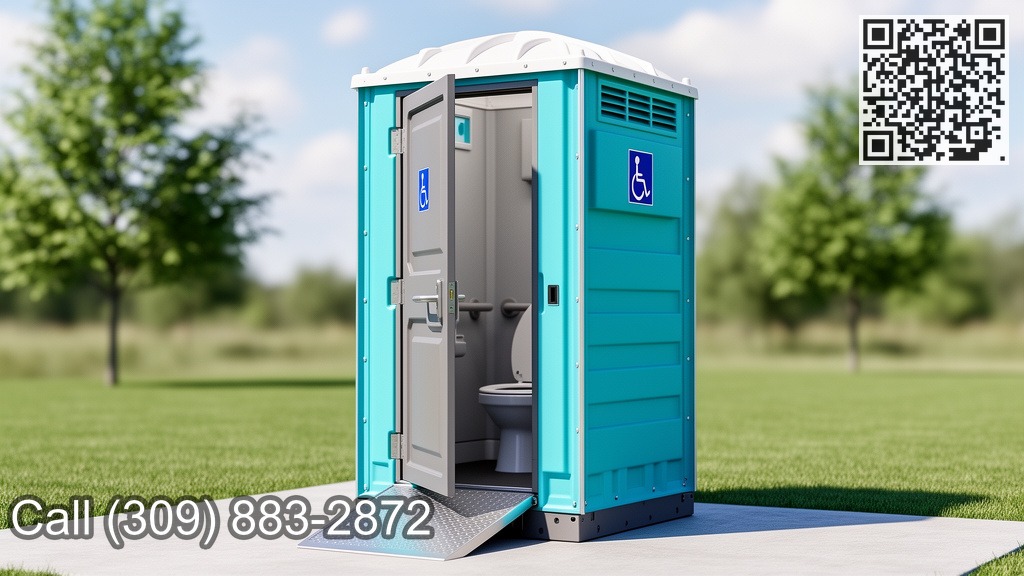
The technological demands for easily accessible mobile systems are not vague. They include toilet-room needs such as component clearances, transforming space, door maneuvering clearances, and suitable grab-bar and water-closet clearance guidelines. https://pristineportablesil.com/faqs/ Those information exist since ease of access relies on real body movement and actual tools dimensions, out labels.
That factor gets shed when individuals use "ADA" as shorthand for "roomier." An ada compliant mobile toilet is not merely a larger box. The inside has to sustain strategy, transfer, transforming, and usage. Door navigating area is not trivial. Neither are clearances around the toilet. Order bars are not optional devices. These are practical components that influence whether someone can utilize the toilet individually or requires support they did not intend to need.
This is one reason experienced coordinators ask better inquiries of vendors. Not simply "Do you have an ADA device?" yet "Is this system intended to meet ADA access requirements for mobile usage?" and "What site problems do you require from us so it works accessibly?" Those conversations tend to be far more useful than purchasing on device dimension alone.
The 5 percent guideline seems straightforward, however planning seldom is
The requirement that at least 5 percent of units in each cluster come noises straightforward. In technique, it forces organizers to believe thoroughly concerning just how they distribute washrooms throughout a site.
A typical blunder is concentrating all easily accessible units in one location while positioning basic systems throughout the remainder of the grounds. That might seem effective from a shipment viewpoint, however it can produce lengthy traveling ranges for people who require the obtainable system. The scoping demand for each cluster pushes preparation in a far better instructions. If washrooms are organized in more than one location, access requires to turn up in greater than one place too.
This has useful consequences for festivals, fairs, races, neighborhood events, exterior events, and other events with vast impacts. If visitors can access food, seating, and entertainment from numerous zones, washroom access need to track with that design as closely as feasible. Otherwise, the occasion interacts, even if accidentally, that some participants are expected to intend around hassle that others never notice.
There is additionally a dignity concern right here. The further away the accessible option is, the even more a guest might need to request for instructions, request assistance, or leave friends behind. Small preparation selections can either maintain privacy and freedom or chip away at both.
Placement can make or break accessibility
If I had to call the solitary most overlooked factor in ada mobile bathroom requirements, it would certainly be positioning. Coordinators often presume that when the right ada compliant portable toilets show up, the job is done. It is not.
The path to the device requires to be accessible. The entrance requires to be obtainable. If a ramp or touchdown becomes part of the arrangement, it has to satisfy the ADA technological requirements. Those are not side notes. They become part of the whole.
This ends up being especially essential at short-lived events because the setting changes swiftly. Ground that looked company during setup can soften. A path that was open at 8 a.m. Can be blocked by obstacles, vendor stock, or crowd control tools by twelve noon. An unit that was visible from the major course can go away behind parked service vehicles after load-in.
The finest event teams review access after arrangement instead of relying on the website map. They walk the path a visitor would certainly take. They search for slopes, squeeze points, puddles, and conflicts. They ask whether a person using a mobility device might approach, go into, maneuver, and exit without needing somebody to consistent the door or clear a path.
That practice captures troubles early, while they are still easy to fix.
Why the icon matters more than individuals think
Accessible mobile systems need to show the International Icon of Access. Theoretically, that can feel like a minor need compared with path and clearance problems. In practice, clear identification has a direct effect on usability.
At active occasions, individuals typically situate washrooms from a distance. If the obtainable unit is not clearly significant, a visitor might lose time approaching conventional devices that do not help them. In a congested setup, that can be tiring and difficult. It can also bring about the unpleasant experience of having to ask strangers or staff where the easily accessible restroom is.
Good accessibility is not only regarding whether an attribute exists. It is additionally concerning whether individuals can find it without friction.
The construction-site exception is narrow
This is an area where confusion sneaks in.
There is a distinction in the ADA criteria for portable bathroom devices at building and construction sites used solely by construction workers. That situation was treated differently under the pointed out 1991 standard. Some people become aware of that exception and incorrectly presume mobile bathroom accessibility is generally flexible or optional.
It is not.
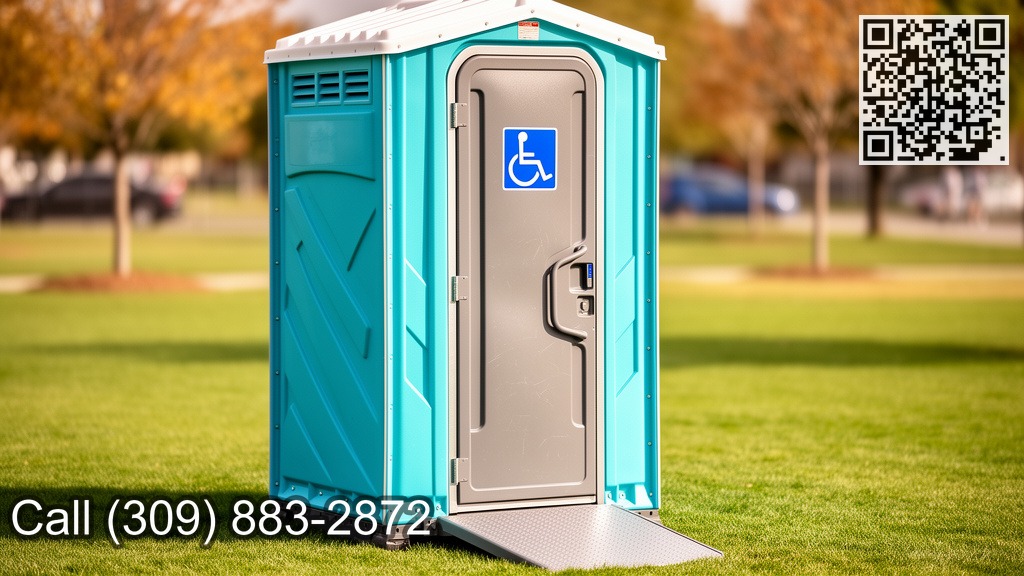
For basic mobile toilet rentals, including event usage, the accessible-unit demand stays. If you are setting up toilets for a public or guest-facing setup, it is high-risk to obtain presumptions from construction-site regulations that do not fit the circumstance. I have actually seen intending conversations go off track because someone slightly kept in mind an exception without comprehending just how limited it was.
When there is any kind of unpredictability, the safest technique is to deal with availability as a core requirement and verify that the unit type, quantity, and placement straighten with the ADA requirements that control the rental context.
Renting the best device starts with much better conversations
If you are arranging an ada portable toilet rental, the high quality of the conversation with the vendor matters almost as much as the unit itself. A great deal can be made clear prior to distribution if the coordinator shares straightforward information regarding the site.
A cramped metropolitan footprint, a sloped park, a multi-zone festival field, and a school fundraising event on pavement all existing different accessibility challenges. The unit might be similar, yet the installation conditions are not. That is why one of the most beneficial preparation conversations specify. Where will the cluster be located? What surface area will sustain the course? Will a ramp or touchdown be needed? How will certainly the unit be recognized and maintained reachable throughout the event?
The solutions do not need to be grand or technical to be effective. They require to be realistic.
Here are 5 inquiries worth working out before delivery:
- How numerous systems will certainly be in each cluster, and does each collection satisfy the accessible-unit requirement?
- Will visitors have the ability to get to the device by an accessible path from the occasion's major available areas?
- Is the entryway set up accessibly, consisting of any kind of ramp or landing that may be needed?
- Is the system clearly related to the International Sign of Accessibility?
- Has someone strolled the actual route and checked problems after configuration, not just on paper?
That short list saves a surprising quantity of trouble.
Accessibility is part of hospitality
There is a propensity to discuss conformity in a completely dry, defensive way. That misses out on the human fact. For guests that need an ada accessible portable restroom, restroom access influences whether an occasion feels feasible at all.
Some attendees prepare around discomfort, power limits, transfer requirements, or movement devices every time they leave home. They see details others miss because those information can hinder an outing. An improperly positioned toilet can transform a family members event right into a demanding endurance test. A well-planned one can enable a person to kick back and remain longer.
I bear in mind an area occasion where the available toilet positioning was managed specifically well. It was not hidden off to the side, and it was not set so far apart that it seemed like a separate accommodation. It was merely incorporated into the main event circulation, easy to find, and convenient. No one made a speech concerning it. No one required to. The setup quietly communicated that impaired visitors were anticipated and welcomed.
That is what thoughtful preparation does at its best. It eliminates the requirement for individuals to ask for special handling in the initial place.
Broader enforcement makes this worth taking seriously
Accessibility conformity is not coming to be much less pertinent. If anything, it is being enforced within a more comprehensive compliance setting throughout fields. One recent example is the Department of Justice assistance prolonging a web and mobile accessibility deadline for state and local governments to April 26, 2027 for bigger entities. That update is about electronic access, not portable toilets, however it reflects a larger reality. ADA conformity continues to be energetic, noticeable, and consequential.
For occasion organizers, towns, locations, and service providers, the lesson is basic. Accessibility ought to not be dealt with as an one-time paperwork exercise or a low-priority operations information. It belongs in regular planning, having, arrangement, and last walkthroughs. The organizations that do this well usually are not responding to one narrow rule. They have developed the practice of asking, early and continually, whether handicapped individuals can really use what is being offered.
That frame of mind has a tendency to improve greater than compliance. It enhances trust.
Common judgment calls at real events
Not every site presents tidy problems. Temporary events frequently include compromises, weather condition changes, tight shipment windows, and competing needs for room. That is exactly why judgment matters.
Sometimes the most effective restroom location for general crowd circulation is not the best one for obtainable transmitting. Often a collection needs to be moved closer to stable accessibility paths also if that complicates solution logistics. In some cases the accessible unit ought to be much more main, not much less, due to the fact that a lengthy detour creates an obstacle no person planned. These are not abstract issues. They come up constantly.
The right response is rarely the one that is easiest only for setup teams. It is the one that protects useful accessibility for participants who rely on it.
An organizer does not need to end up being a lawful specialist to make far better choices. Yet they do need to stop considering the ada-compliant portable toilet as a stand-alone things. It becomes part of an experience. If the route is obstructed, if the entry is incorrect, or if the device is difficult to discover, the visitor does not experience accessibility. They experience a problem.
A much better common for comprehensive events
Inclusive event gain access to is built via ordinary selections made very carefully. Bathroom services are one of those choices. When coordinators give ada compliant accessible mobile restrooms that are appropriately counted, properly noted, and effectively positioned, they do greater than fulfill a requirement. They minimize tension, preserve self-respect, and make participation possible for more people.
That is worth taking seriously.
An ada handicap easily accessible portable restroom need to never be treated as a symbolic gesture parked somewhere on site. It must be selected and set up with the exact same degree of intent that enters into entryways, seating, and blood circulation. At momentary occasions, accessibility lives or dies in the details, the course, the entrance, the turning space, the clearances, the presence, the collection layout.
If your occasion includes mobile restrooms, after that toilet access belongs to the occasion experience you are in charge of. The bright side is that this is one location where thoughtful preparation goes a long method. A well-handled ada mobile restroom configuration tells visitors something crucial without a solitary statement: you prepared for them to be here.
 Ask ChatGPT
 Ask Grok
 Ask Perplexity
 Ask Claude
 Ask Google AI
 Ask You