ADA Mobile Toilet Rental: How Accessibility Uses Beyond Permanent Facilities
@troytskj342
September 25, 2026 · 15 min read
When people think about ADA conformity, they generally visualize buildings, not short-term configurations. They think about office restrooms, dining establishment entryways, institution passages, and clinical clinics. Mobile cleanliness commonly rests outside that mental map, as if movement and gain access to matter less since the structure is momentary. In practice, that is specifically where problems begin.
A short-term restroom can still produce a very actual barrier. If a person comes to a public occasion, a community celebration, a roadside job zone open up to the public, or any other site using rented cleanliness units, the truth that the commode is mobile does not get rid of the need for gain access to. The Americans with Disabilities Act does not quit at permanent walls and pipes. It gets to right into the practical truths of exactly how people relocate with public rooms, including the areas that only exist for a day, a week, or a season.
That is why ADA portable commode service is not a courtesy product or an optional upgrade for look. It belongs to making a site functional by actual people, some of whom require even more room, a stable strategy, certified clearances, and clear recognition. The legal standard that matters below is the 2010 ADA Specifications for Accessible Style, as applied by the Division of Justice and translated by the Accessibility Board. For mobile devices offering the general public, ease of access is not put on hold just because the bathroom got here on a trailer.
Temporary does not imply exempt
This is the factor that surprises many event coordinators and some website managers. They presume availability policies soften when facilities are short term. They may take care concerning parking, entrance routes, and seats, after that deal with bathroom rentals as a different, totally logistical issue. Somebody orders a bank of units based upon crowd count, budget, and pumping timetable, and just later asks whether one need to be "ADA."
That series obtains the concern backward.
Portable toilets utilized in public setups still have to be taken into consideration through the same accessibility lens used in other places. The Access Board has actually been clear that, for clusters of portable single-user bathroom systems, at the very least 5 percent of the devices in each collection should be accessible, and that this uses also at short-lived events. That one sentence brings even more weight than many people realize.
It implies ease of access is not satisfied by saying, "There is one obtainable unit somewhere on the premises." It additionally indicates the answer is not merely to lease a large system and hope that cares for it. The scoping policy applies to each collection. If units are dispersed across a site, each organizing demands to be examined on its own.
This issues in the real world since mobile washrooms are often expanded for benefit. A fairground may have a little financial institution near food suppliers, one more near vehicle parking, and another near an efficiency location. A sports occasion might do the same. If ease of access exists just in one far corner, a person with a movement impairment might still encounter a long, unequal, or impractical trip just to use the toilet. The standard addresses that by tying availability to the collection itself, not simply the general event inventory.
What an available mobile device really has to do
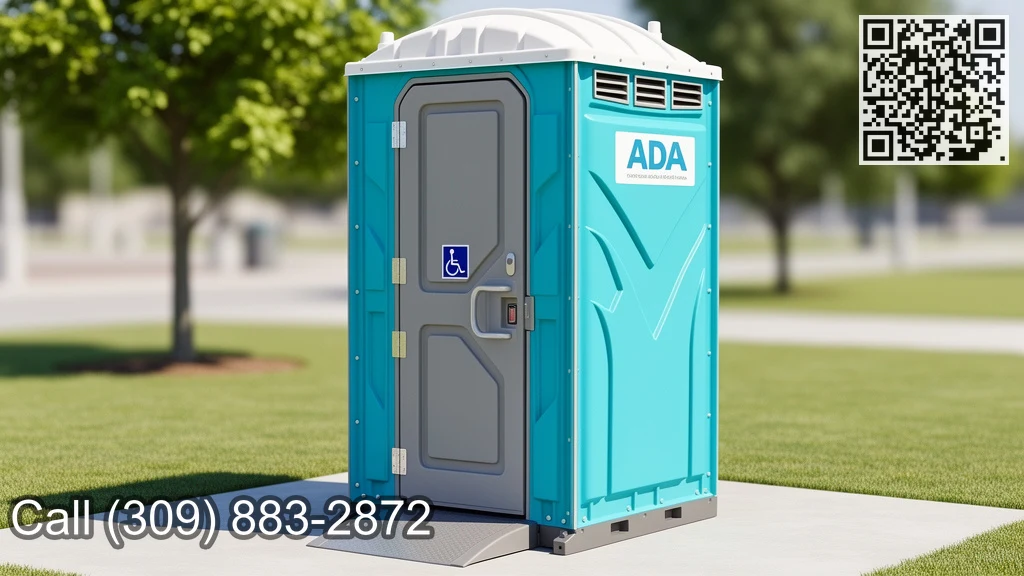
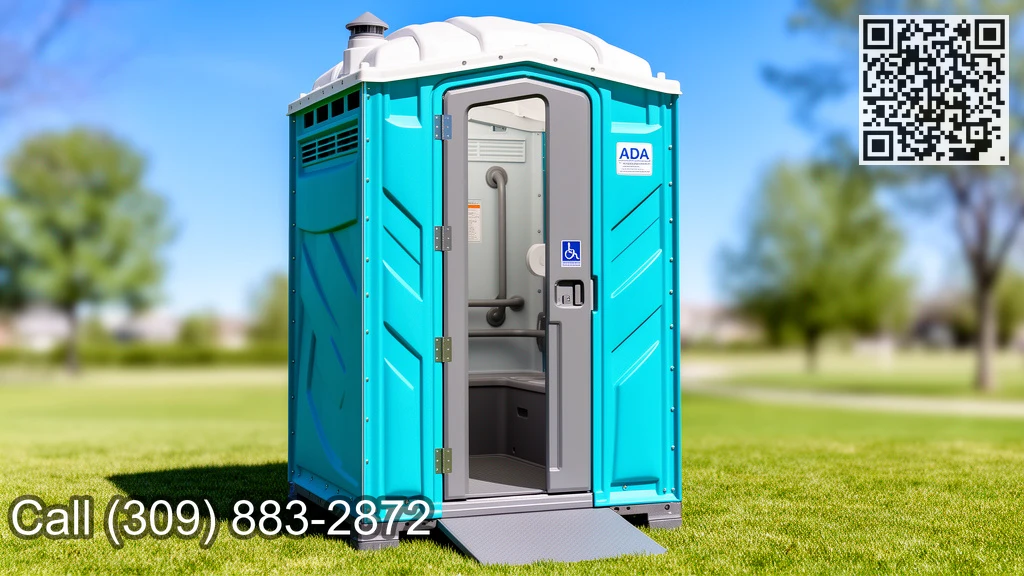
There is a common misconception in the rental market that an ADA accessible portable washroom is just a bigger cabin with a wider door. Dimension aids, but dimension alone is not compliance. The device needs to satisfy the suitable toilet-room technological needs. In plain terms, that suggests the interior and access have to support genuine usage, not simply visual resemblance to accessibility.
The confirmed government advice points to numerous technological areas that matter. The device requires the called for clearances for fixtures, sufficient transforming room, proper door steering clearances, and appropriate grab bar and water storage room clearance rules. It also should be understood the International Symbol of Accessibility. Beyond the device itself, there have to be an easily accessible route and accessible entrance, and if ramps or touchdowns are needed, they have to adhere to ADA technical needs as well.
That broader framing is important due to the fact that several gain access to failings take place outside the system. I have seen sites where the easily accessible mobile toilet was without a doubt supplied, plainly significant, and physically bigger than the others, but placed at the end of a sloppy slope, behind an aesthetic lip, or on unstable ground that made strategy challenging or difficult. Theoretically, someone rented the best product. In practice, the restroom was not accessible.
That is why a certified easily accessible portable bathroom is never simply a box to examine the rental order. Positioning, route, quality changes, and entry problems all matter.
The course to the washroom becomes part of the toilet experience
A lot of access troubles appear prior to anyone gets to the door. For a person making use of a mobility device, pedestrian, cane, or other movement help, the course to the toilet can be the determining factor in between independent use and total exclusion. The ADA structure identifies that. An ada certified portable commode is not truly available if the path to it is obstructed or unusable.
At short-term websites, this is where planning typically needs one of the most interest. Event premises and outdoor venues are frequently incomplete naturally. Surface areas may be yard, compacted dirt, gravel, or sidewalk in mixed problem. Portable devices might be presented where the vehicle can conveniently put them rather than where users can easily reach them. If the only obtainable system is set on a spot of soft ground after rain, access may disappear within hours.
The regulations do not invite improvisation right here. If ramps or touchdowns are required, those aspects need to comply as well. That issues due to the fact that people sometimes think a loosened sheet of plywood or an impromptu change addresses the issue. It may resolve a shipment trouble, but it does not immediately develop an available entrance.
The practical lesson is simple. If you are setting up ada mobile toilet rental, the site browse through matters nearly as much as the tools option. The toilet system, the route, the entry, and the bordering setup demand to function together.
Why "one accessible device somewhere" can still fall short
People commonly speak freely and say they need "an ADA porta potty," single, as if the issue is addressed when that unit appears on the billing. Yet the scoping guideline for clusters alters the estimation. At the very least 5 percent of units in each cluster must be accessible.
For little arrangements, that usually equates to one available device in a cluster. For larger financial institutions, it may still be one, depending on overall matter, yet the key point is that you can not deal with an entire place as one abstract overall if the toilets are physically set up in different clusters.
This is among those compliance details that sounds administrative until you picture using the site yourself. Photo getting to a jampacked event, car parking near one entryway, and locating a close-by cluster of basic devices while the only ada certified obtainable portable restrooms are much across the premises. A person without a movement special needs might see that as troublesome. An individual with a mobility special needs may locate it exhausting, unsafe, or just impossible.
Accessibility is not almost whether a function exists someplace. It is about whether that attribute is meaningfully offered where people require it.
Identification matters greater than people think
An easily accessible device have to be understood the International Symbol of Availability. That can sound like a tiny administrative detail, however it does practical deal with the ground.
At an active website, people need to discover the right bathroom swiftly. An individual managing discomfort, fatigue, seriousness, or restricted wheelchair needs to not have to check every system straight to determine which one is intended as the accessible alternative. Clear recognition lowers complication and assists staff direct visitors suitably. It likewise signifies, at the very least at a glimpse, that accessibility was thought about as opposed to included as an afterthought.
This is particularly useful at larger public occasions where volunteers or short-term team might not know the site layout well. If a guest asks where the ada portable washroom lies, noticeable marking allows an uncomplicated answer.
The exemption individuals hear about, and usually misapply
There is one area where complication tends to spread rapidly: construction sites. Some individuals have listened to that mobile bathroom access guidelines do not use at building locations and then bring that assumption right into every rental conversation. That is also broad.
The relevant distinction in the validated context is slim. The ADA criteria identified an exception in the earlier 1991 scoping for mobile toilets at building websites made use of specifically by construction personnel. That is not the same as stating all mobile units at all construction-related locations are excluded, and it is not a covering pass for public-facing temporary facilities.
This matters due to the fact that several https://pristineportablesil.com/gallery/ sites blur classifications. A job site may have units booked just for workers, or it might have facilities meant for public communication as well. General mobile commode leasings serving the public continue to be based on the accessible-unit demand. If there is any kind of public-facing usage, it is high-risk to presume the construction context gets rid of accessibility obligations.
That is just one of those locations where careful judgment matters. People enter trouble when they borrow a half-remembered exemption and apply it much past its actual scope.
Rental decisions that form conformity before delivery day
An excellent portable hygiene strategy generally starts with uncomplicated inquiries, asked early enough that the solutions can change the design. By the time vehicles are lined up and secure fencing is mounted, accessibility errors become costly and awkward.
Here are the inquiries that usually improve the result:
- How many separate bathroom collections will the site have?
- Which users are expected at each cluster, including participants of the public?
- Is there an available path to every available unit from the bordering event or facility area?
- Will the placement surface and entryway problem stay useful if climate changes?
- Is the obtainable system plainly identified and very easy for personnel and visitors to locate?
That short list does not replace legal evaluation or site-specific planning, but it catches the most typical blind spots. It likewise moves the conversation away from item labels and towards real usability.
The language around these leasings can conceal the genuine issue
People use several search terms and sector expressions when looking for devices. They might request an ada handicap obtainable mobile toilet, an ada compliant mobile bathroom, ada-compliant mobile bathrooms, or an ada accessible portable bathroom. The phrasing varies, yet the underlying question is the same: can an individual with a handicap use this washroom separately and with dignity in the setting where it is placed?
That is why I often tend to be careful concerning marketing language. An item summary can recommend conformity without clarifying whether the full arrangement, consisting of path and entry, has been thought about. A system might be advertised as an ada portable bathroom, but the website plan still figures out whether it functions as one.
This is not cynicism. It is simply experience. In momentary atmospheres, accessibility is successful or falls short through information. A couple of feet of negative placement can reverse an appropriately rented out device. A missing icon can make the bathroom hard to locate. A cluster circulation choice can leave one part of a place effectively inaccessible even when the complete device matter seems adequate.
Accessibility is not a deluxe feature
There is still a tendency in some preparation discussions to mount easily accessible mobile restrooms as a premium add-on, the means a person may talk about upgraded coatings or additional handwashing terminals. That mounting misses out on the point.
For someone that needs the added area, transforming room, navigating clearance, certified entrance, or component format, the obtainable unit is not a convenience. It is the toilet. Without it, there may be no useful alternative at all.
That is where a compassionate method transforms the top quality of preparation. As opposed to asking, "Do we truly require one?" the much better inquiry is, "Can every guest or user in fact use the facilities we are providing?" That appears subtle, however it modifies choices regarding quantity, placement, signs, and timing.
It additionally transforms just how teams think of issues. When accessibility is missing, the problem is not that somebody is being challenging. The issue is that the basic cleanliness plan excluded them.
Temporary events are not outside the larger compliance culture
Accessibility enforcement and conformity activity do stagnate in a straight line, yet the more comprehensive instructions is apparent. The ADA continues to be energetic across fields, and the conformity setting has remained to evolve, including in electronic availability for state and city government entities. Despite the fact that internet and mobile rules are a different problem from mobile hygiene, they reflect the very same underlying reality: availability commitments are not shrinking right into obscurity. If anything, organizations are being advised that ADA compliance reaches across the complete individual experience.
That issues due to the fact that portable toilet choices are commonly made in operational silos. The event group deals with rentals. The facilities team deals with paths. The lawful team reviews contracts. The communications team takes care of public info. Availability can slide via those gaps unless a person treats it as a common responsibility.
The useful takeaway is not panic. It is interest. A site does not require grand language about inclusion to obtain this right. It needs careful planning and a desire to believe beyond the distribution ticket.
Where coordinators and site managers most often go wrong
Most mistakes are not remarkable. They are normal oversights that accumulate.
Sometimes the obtainable device matter is based upon the complete order, while the actual website makes use of multiple clusters. Sometimes the best unit is rented out, yet a bad course makes it unusable. Occasionally the system is placed in an area that is silent for servicing but challenging for guests to reach. Often no one confirms whether the unit is recognized correctly. Occasionally team member just do not understand where the obtainable restroom is.
These are manageable troubles, but only if they are treated as real planning problems rather than minor details to resolve after setup.
A helpful psychological shift is to treat ada portable toilet needs as part of website layout, not just rental purchase. When you do that, the choices end up being extra meaningful. You quit asking only the amount of devices fit the group and start asking how people with different mobility needs will really move via the space.
What a far better setup appears like in practice
A great setup is seldom fancy. It typically looks simple due to the fact that somebody made good decisions early.
The accessible device is included in the correct collection matter. It is clearly marked. The route to it is thought about beforehand. If a ramp or landing is required, that need is identified prior to the unit arrives. The surrounding location is selected for stable, sensible accessibility, not just vehicle comfort. Team recognize where the easily accessible system is, and the placement still makes sense if the site gets hectic or weather shifts.
None of that is complicated in theory. The obstacle is that temporary facilities invite faster ways. Irreversible buildings are forced to face access in illustrations, allows, and examinations. Mobile bathrooms can feel informal by comparison, that makes it easier for availability to be taken care of casually. However to the individual that needs the washroom, the experience is no much less real due to the fact that the wall surfaces are temporary.
A last useful requirement for judging any type of portable toilet plan
When I check out a temporary toilet setup, I return to a short collection of dry runs. Can the individual find it? Can they reach it? Can they enter it? Can they navigate inside it? Can they use it with the intended clearances and supports? If the honest solution to any one of those is no, the setup is refraining what an ada compliant mobile bathroom arrangement is intended to do.
That is the heart of the concern. An ada-compliant mobile toilet is not simply a larger rental unit. It is part of an obtainable hygiene system that includes scoping, recognition, route, entry, and usable indoor room. The government requirements do not stop at permanent buildings, and neither must our planning.
For coordinators, service providers, communities, venue drivers, and any individual setting up ada mobile commode service, the obligation is simple even if the details call for treatment. Short-term centers still require to be easily accessible. Public-facing mobile washroom clusters still require the needed easily accessible units. The available units still require proper recognition, path, entrance, and technological toilet-room features. And minority exemptions that exist must be applied directly, not casually.
Accessibility beyond permanent centers is still ease of access. Individuals do not quit needing self-respect, space, and safe usage even if the bathroom got here on a truck.
 Ask ChatGPT
 Ask Grok
 Ask Perplexity
 Ask Claude
 Ask Google AI
 Ask You